MUST HAVE CAMPERVAN ACCESSORIES
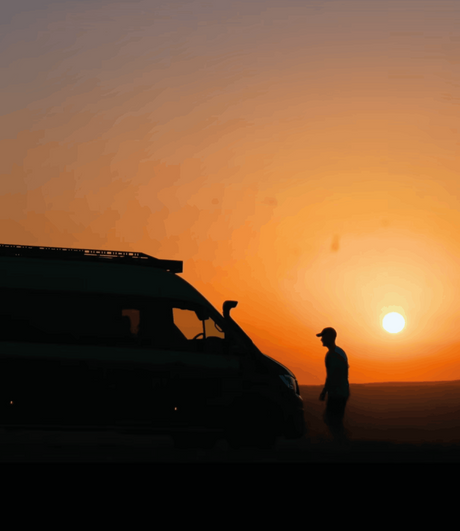
Scroll through Instagram or YouTube for five minutes, and you’ll see the ultimate overland dream: rugged all-terrain tyres, full-length roof racks, mean-looking light bars, and recovery tracks bolted to every panel.
It looks epic. It screams adventure.
But here’s the reality check most gear brands won't tell you:
Half of those setups are pure flex. Some upgrades will completely transform your off-grid freedom—giving you warmer nights, endless solar power, and the confidence to take the road less travelled. Others simply add dead weight, drain your fuel tank, and drain your bank account without ever getting used.
So, how do you separate the game-changing essentials from the over-hyped eye candy?
In this guide, we cut through the noise. We break down the most popular adventure van accessories on the market, reveal what they actually do when you’re out in the wild, and help you invest in the exact gear your build needs to go play dirty.

WHAT'S THE REAL MISSION?
The fastest way to blow your build budget is buying accessories before you’ve actually decided how you’re going to use the van.
A weekend cruiser built for surf trips to Cornwall needs a completely different setup than a rugged, long-haul rig heading off-grid through Morocco. One needs quick-access board mounts and easy shower setups; the other demands heavy-duty power storage, serious recovery gear, and all-terrain traction.
Before opening your wallet, ask yourself these five honest questions:
-
Where are you actually sleeping? Powered campsite pitches with hot showers, or remote, off-grid wild spots miles from civilisation?
-
What’s under your tyres? Smooth tarmac and coastal car parks, or rutted green lanes, soggy fields, and loose gravel trails?
-
What gear are you hauling? Bikes, paddle boards, and wet wetsuits, or just a pair of hiking boots and a folding chair?
-
How long are you staying out? Quick 48-hour weekend getaways, or multi-week overland expeditions with zero hookups?
-
What’s your priority? Living space comfort, or raw off-road capability?
Your answers, not Instagram, should dictate every single penny you spend. Buy for the reality of your trips, not someone else's highlight reel.

1. OFF-ROAD WHEELS AND ALL-TERRAIN TYRES
Best For:
-
Wet grass,
-
Muddy campsites,
-
Gravel tracks,
-
Rutted green lanes.
If you make only one exterior upgrade to your van, make it this one. A set of aggressive off-road wheels wrapped in premium All-Terrain rubber fundamentally changes what your van can do the second you leave the tarmac.
Standard road tyres are built for smooth highways and high fuel efficiency. Drop them onto a wet grass pitch or a soggy farm track, and their tight tread channels quickly pack with mud, turning them into slick racing tyres with zero traction.
All-terrain tyres feature deep, self-cleaning tread blocks and reinforced sidewalls engineered to bite into loose gravel, deep mud, sand, and wet fields.
No, they won't magically turn a front-wheel-drive Transporter into a rock-crawling Land Rover Defender but when the rain pours and everyone else is wheel-spinning on a soaked campsite, A/T tyres are the difference between driving straight out or waiting three hours for a tractor to pull you out of the ditch.
PROS
✔ Improved grip on loose surfaces
✔ Better durability
✔ More aggressive adventure styling
✔ Increased confidence when conditions deteriorate
CONS
✘ Slightly more road noise
✘ Reduced fuel economy
WORTH IT?
For most campervan owners: Yes.

2. ROOF RACKS
Think of a full-length platform rack as adding an extra utility room to your van. The biggest killer of van-life comfort isn't cabin size; it's clutter. The moment you start jamming wet wetsuits, bulky recovery gear, or oversized storage trunks into your interior, your living space starts feeling like a cramped cupboard.
A heavy-duty aluminium roof rack frees up critical indoor floor space by moving your largest, dirtiest, and most awkward kit onto the roof.
It’s not just a luggage carrier—it serves as the structural foundation for your entire exterior setup.
As a bonus, a solid rack frame acts as an upper shield for your vehicle, deflecting low-hanging tree branches away from expensive roof vents, skylights, and paintwork on tight forest tracks.
PROS
✔ Massive increase in storage capacity
✔ Flexible mounting options
✔ Protects roof equipment
✔ Makes longer trips easier
CONS
✘ Can affect fuel economy
✘ May increase wind noise
WORTH IT?
Absolutely, if you regularly carry outdoor gear.


3. LIFT KITS AND UPGRADED SUSPENSION
Most campervans leave the factory designed to haul delivery boxes, not a full camper interior complete with heavy ply cabinetry, water tanks, rock-and-roll beds, and leisure batteries. Add all that weight, and your stock suspension sags, riding dangerously close to the bump stops and turning every pothole into a bone-rattling crash.
Upgrading your suspension with heavy-duty springs, tuned dampers, and a suspension lift kit gives your van its dignity and capability back.
-
Gains Critical Ground Clearance: A 35mm to 50mm lift lifts your engine sump, exhaust, and water tanks safely out of harm's way, letting you roll over rock-strewn tracks and deep ruts without cringing at every scrape.
-
Better Approach & Departure Angles: Helps you clear steep campsite ramps, ferry slipways, and ditch crossings without crunching your front bumper or tow bar.
-
Eliminates Body Roll & Sway: Upgraded, heavy-duty suspension stiffens up the ride, taming body roll in cornering winds and keeping your van planted at motorway speeds.
-
Restores Ride Comfort: Instead of bottoming out over every speed bump, high-performance dampers absorb the hits properly—protecting both your vehicle frame and your interior furniture from rattling itself apart.
PROS
✔ More ground clearance
✔ Better off-road performance
✔ Improved ride quality with premium suspension
✔ Increased confidence on rough terrain
CONS
✘ Expensive
✘ Can affect handling if poorly designed
WORTH IT?
Only if you genuinely leave the tarmac behind. For campsite users, the money may be better spent elsewhere.

4. SNORKELS
Best For:
-
Dusty convoy driving
-
Gravel tracks
-
Overland expeditions
-
Desert tours.
Ask most people what a snorkel does, and they’ll tell you it’s for driving through deep rivers like a submarine. While it does help prevent hydrolocking your engine in high water, that isn't its primary job on an overland campervan.
Its real mission? Delivering clean, cool air to your engine when the trail turns nasty.
By raising the air intake up to roof height, a snorkel pulls in clean, dust-free air from above the silt line. If you stick to paved roads and rainy British campsites, a snorkel is pure visual aggression. But if your dream trip involves corrugated gravel tracks in Scandinavia, dusty trails in Spain, or overland routes through North Africa, it’s cheap insurance for your engine.
PROS
✔ Prevents abrasive sand and fine dust from bypassing clogged filters and causing premature engine wear.
✔ Keeps a steady flow of clean, cooler air entering the engine, preventing power loss on hot trail days.
✔ Forward-facing intake heads scoop air efficiently at speed, helping your engine breathe easier on long motorway runs.
CONS
✘ Limited benefit for most UK users
WORTH IT?
Essential for serious overland travel. Probably unnecessary for weekend camping.

5. LIGHT BARS
Best for:
-
Off-road driving
-
Remote locations
-
Night-time exploration
Factory campervan headlights are engineered for paved highways with streetlights and reflective road signs. The moment you pull off the tarmac after dark, standard dip and main beams fall drastically short—leaving deep shadows right where you need to see ruts, fallen branches, or hidden ditch edges.
A high-lux LED light bar floods the trail with a wide, ultra-bright beam pattern that reaches far beyond the range of standard halogen or factory LED bulbs.
IMPORTANT! Light bars are immensely powerful and intended strictly for off-road use, private land, or remote unlit tracks. Keep them switched off on public highways to avoid blinding oncoming traffic!
Worth it?
Excellent for genuine adventure travel. Mostly cosmetic if your van rarely leaves campsites.
WORTH IT?
Excellent for genuine adventure travel. Mostly cosmetic if your van rarely leaves campsites.

6. RECOVERY TRACKS
Best for:
-
Mud
-
Sand
-
Wet grass
-
Solo travellers
If you carry only one piece of recovery equipment on your van, make it a set of high-impact traction boards. They are easily one of the most cost-effective self-recovery upgrades you can buy, delivering massive peace of mind for a relatively small investment.
The second your tyres lose traction and start spinning in a waterlogged field or soft sand, digging your van deeper into the dirt and risking bottoming out your chassis, recovery tracks provide instant bite.
Getting bogged down is an inevitable part of exploring off the beaten track. Carrying a set of recovery tracks turns what could be a trip-ending nightmare into a five-minute minor inconvenience, getting you back on the road without needing to wait hours for a tractor or pay an eye-watering breakdown recovery bill.
WORTH IT?
Yes. Every adventure van should carry a set.

7. WINCHES
Best for:
-
Serious expeditions
-
Remote travel
-
Heavy off-road use
An electric winch is the ultimate insurance policy for extreme off-road travel. Mounted directly to a hidden bumper cradle or heavy-duty front bar, it allows you to pull your fully loaded campervan out of deep mud, steep ditches, or slick clay completely unassisted—without needing a second vehicle or a tow strap.
WORTH IT?
If you're planning expeditions through remote terrain: Absolutely. For everyone else: Probably not.
The Most Important Upgrade Isn't a Product
After years of building and using adventure vans, we've learned something important:
The best campervan upgrade isn't a snorkel, a rugged roof rack or even a fancy lift kit. It's CONFIDENCE. The confidence to take that dirt track, to stay an extra night. The confidence to explore somewhere new. The right upgrades don't just change how your campervan looks, they change where you're willing to go and that's where the real adventure begins.